

Table of Contents
- Why Herbal Tea Works for PMS: The Science of Soothing Symptoms
-
The 7 Best Teas for PMS Relief (Backed by Herbal Tradition)
- Chamomile: The Gentle Anti-Spasmodic for Cramps and Sleep
- Red Raspberry Leaf: Uterine Tonic for Cycle Regularity
- Ginger: Warming Relief for Menstrual Discomfort and Nausea
- Vitex (Chasteberry): Hormonal Support for Estrogen Balance
- Peppermint: Digestive Comfort for Bloating and Pelvic Pain
- Lemon Balm: Nervine Herb for Mood Regulation and Stress Relief
- Dandelion Root: Gentle Detox for Bloating and Inflammation Reduction
- How to Relieve PMS Naturally: A Daily Ritual for Hormonal Harmony
- Herbs for Hormonal Balance: Choosing the Right Blend for Your Cycle
- Tea Pairing and Flavor Profiles: Make Your PMS Tea a Pleasure
- Safety First: Contraindications and Teas to Avoid During Your Period
- Cold Brew vs. Hot Infusion: Which Retains More Nutrients?
- DIY Budget-Friendly Tea Blends for PMS Relief
- Frequently Asked Questions
Last Updated: October 1, 2026
Why Herbal Tea Works for PMS: The Science of Soothing Symptoms
Herbal tea for PMS works because certain plants contain compounds that ease cramps, calm the nervous system, and support hormone balance. Unlike a painkiller that blocks one symptom, a well-chosen cup works on several at once.
The 7 Best Teas for PMS Relief (Backed by Herbal Tradition)
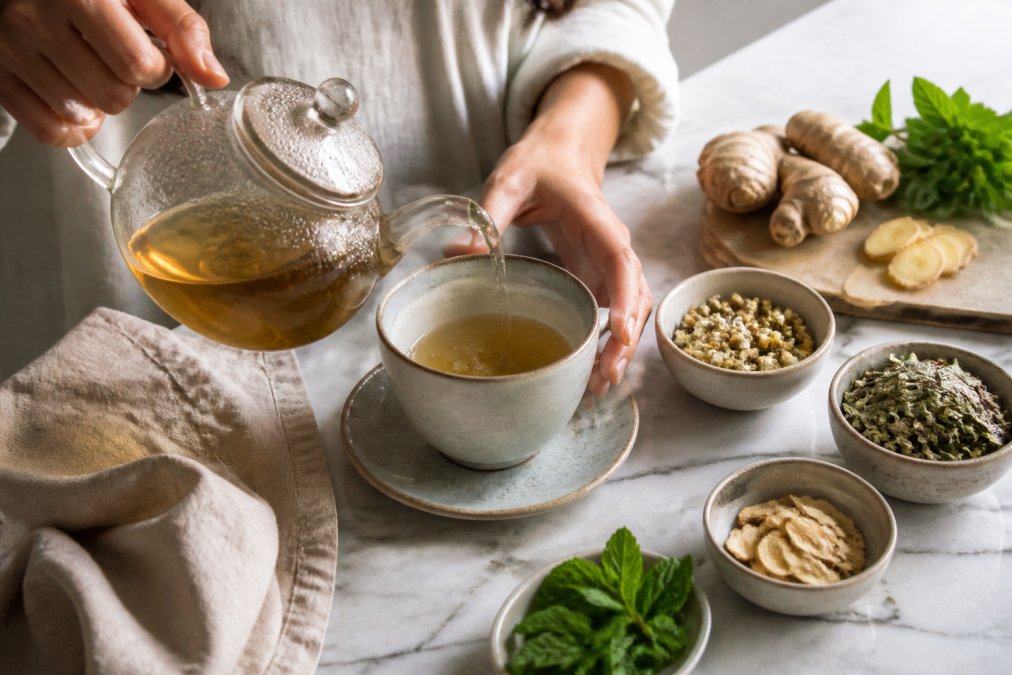
The best tea for PMS relief combines an anti-spasmodic herb with one that supports mood or digestion. Most people do best with two or three herbs. Here's the short version:
| Herb | Best For | Brew Time | Caffeine |
|---|---|---|---|
| Chamomile | Cramps, sleep | 5-7 min | None |
| Red raspberry leaf | Cycle regularity | 8-10 min | None |
| Ginger | Nausea, pain | 5-10 min | None |
| Vitex | Hormonal support | 8-10 min | None |
| Peppermint | Bloating | 5-7 min | None |
| Lemon balm | Mood, stress | 5-7 min | None |
| Dandelion root | Water retention | 10-15 min | None |
Chamomile: The Gentle Anti-Spasmodic for Cramps and Sleep
Chamomile is the safest starting point for most people. Its anti-spasmodic properties relax uterine contractions, which is what cramping actually is, and it acts as a mild nervine, settling the nervous system. That matters because poor sleep makes every other PMS symptom worse.
Red Raspberry Leaf: Uterine Tonic for Cycle Regularity
Red raspberry leaf is the classic uterine tonic in Western herbal tradition. Rich in minerals, it tones the uterine muscle over time rather than for instant relief, a long-game herb many herbalists suggest drinking daily across a full cycle.
Ginger: Warming Relief for Menstrual Discomfort and Nausea
Ginger is the one to reach for when your period comes with nausea or a heavy, dragging ache. Fresh root works better than powder: slice a thumb-sized piece thinly and simmer gently for five to ten minutes. If you get loose stools before your period, ginger is gentler than peppermint.
Vitex (Chasteberry): Hormonal Support for Estrogen Balance
Vitex, also called chasteberry, is the herb most associated with hormone modulation. It works upstream, on the pituitary, rather than on the uterus.
Peppermint: Digestive Comfort for Bloating and Pelvic Pain
Peppermint is the bloating herb. It relaxes the smooth muscle of the digestive tract, easing the gas and fullness that make your jeans feel tight before your period, and its mild anti-spasmodic effect can take the edge off pelvic pain. Drink it after meals if you're prone to reflux.
Lemon Balm: Nervine Herb for Mood Regulation and Stress Relief
Lemon balm is a nervine herb, working on the nervous system rather than the uterus. Choose it when irritability, anxiety, or a short fuse is your main PMS complaint. Its gentle lemon flavor makes it easy to drink in the evening, and many find it helps sleep without the grogginess of stronger sedatives.
Dandelion Root: Gentle Detox for Bloating and Inflammation Reduction
Dandelion root is a mild diuretic, helping the body release retained water, which is why it shows up in so many PMS blends aimed at bloating and puffiness. It also supports the liver, where hormones are processed and cleared.
How to Relieve PMS Naturally: A Daily Ritual for Hormonal Harmony
Knowing how to relieve PMS naturally comes down to consistency, not intensity. One cup the day your cramps hit does far less than a steady habit across the month. Most herbs here work on the luteal phase, the roughly 10 to 14 days before your period when estrogen and progesterone shift, starting on day one of cramping is too late for the hormonal side of PMS.
Build the ritual around your cycle
- Follicular phase (roughly days 1-13, starting with your period): light, mineral-rich teas. Red raspberry leaf is the classic uterine tonic, one cup daily is reasonable.
- Ovulation (around mid-cycle): keep it simple. One cup of red raspberry leaf or a mild blend; no need for stronger herbs when you feel well.
- Luteal phase (the PMS window, roughly the last 10-14 days): this is where the ritual does its work. Add chamomile, lemon balm, or peppermint. Vitex is typically taken daily across the whole cycle for two to three months before judging results.
- Menstruation: ginger and chamomile for cramps and comfort. Ginger is warming and helps with the nausea and dragging ache that often shows up on day one or two.
Practical dosing and timing
A few specifics that make the difference between a ritual that works and one that fizzles:
- One to three cups a day is the typical range for the gentle herbs (chamomile, lemon balm, peppermint). More is not better.
- Roots need simmering, not steeping. Ginger and dandelion root release their compounds over 10-15 minutes of gentle simmering; leaves and flowers steep covered for 5-10 minutes.
- Cover the cup. Volatile oils in chamomile, peppermint, and lemon balm escape with the steam.
- Drink chamomile and lemon balm in the evening if sleep is part of your symptom picture, both are mild nervines that settle the nervous system rather than sedate it.
- Drink peppermint after meals rather than on an empty stomach, especially if you are prone to reflux.
The non-tea basics that multiply the effect
Tea works best as part of a picture, not a replacement for it. The same luteal-phase window responds well to steady blood sugar (protein with each meal), consistent sleep and wake times, and regular movement. Magnesium-rich foods and hydration support the same pathways the herbs are nudging, skip these and expect a smaller effect.
A simple two-week starter plan
If you are new to this, do not start seven herbs at once. Pick one symptom, one herb, and one time of day. Run it for two full cycles before adding anything else. That way you can actually tell what is helping.
Herbs for Hormonal Balance: Choosing the Right Blend for Your Cycle
Choosing herbs for hormonal balance means matching the herb to the phase and the symptom, not picking the strongest one.
A simple rule helps:
- Cramps first? Start with chamomile and ginger.
- Mood first? Start with lemon balm.
- Bloating first? Start with peppermint and dandelion root.
- Cycle irregularity first? Start with red raspberry leaf and vitex.
Tea Pairing and Flavor Profiles: Make Your PMS Tea a Pleasure
A tea you dread drinking is a tea you'll stop drinking by week two. Pairings that work:
- Chamomile + lemon balm: soft, floral, lightly citrus. Good before bed.
- Ginger + lemon + honey: bright and warming. Good in the morning.
- Peppermint + dandelion root: cooling over an earthy base. Good after meals.
- Red raspberry leaf + peppermint: earthy with a cool finish. Good daily.
Safety First: Contraindications and Teas to Avoid During Your Period
Herbal tea is gentle, but "natural" does not mean "no interactions." Because PMS care overlaps with birth control, antidepressants, and thyroid medication for many readers, read this section twice.
Herb-by-herb cautions
- Vitex (chasteberry): the biggest interaction risk here. It can interfere with hormonal birth control, fertility medications (including clomiphene), and dopamine-related drugs used for Parkinson's or prolactin issues. Skip it unless a clinician clears it.
- Ginger: culinary amounts are generally fine. High-dose supplements may add to the effect of blood thinners like warfarin or aspirin, so keep ginger to food-level amounts if you take an anticoagulant.
- Dandelion root: a mild diuretic, so it can compound prescription diuretics (like furosemide or hydrochlorothiazide) and may not suit kidney disease or lithium.
- Peppermint: generally safe, but it relaxes the lower esophageal sphincter and can worsen reflux. If you take a proton-pump inhibitor, peppermint tea may work against it.
- Red raspberry leaf: traditionally avoided in early pregnancy unless supervised by a midwife or doctor. If you are trying to conceive, mention it to your provider.
- Licorice root: can raise blood pressure and lower potassium with regular use. Skip it if you have hypertension, heart disease, or take a diuretic.
- Chamomile and lemon balm: among the safest options here. Chamomile is in the ragweed family, so people with severe Asteraceae allergies should test a small cup first; lemon balm may add to the drowsiness of sedatives.
Interactions with common PMS-adjacent medications
A few pairings deserve a direct callout:
- Hormonal birth control (pill, patch, ring, implant): vitex is the herb to avoid. It works on the pituitary and can theoretically blunt or alter how these methods behave. Chamomile, ginger, peppermint, and lemon balm are generally considered compatible.
- SSRIs and other antidepressants: no major direct interaction with the teas on this list, but lemon balm and chamomile can add mild sedation. If you already feel groggy on your medication, drink them in the evening.
- Thyroid medication (levothyroxine): separate any herbal tea from your dose by at least four hours; tannins and minerals can reduce absorption if taken together.
- Blood thinners: keep ginger and dandelion root modest, and tell your prescriber about any daily herbal routine.
When to stop and call a provider
Tea is a support tool, not a treatment for a diagnosed condition. Talk to a healthcare provider if your PMS symptoms disrupt work, relationships, or sleep; if you suspect PMDD (premenstrual dysphoric disorder); if you have a bleeding disorder or unexplained heavy periods; or if symptoms do not improve after two to three cycles of consistent herbal support.
Cold Brew vs. Hot Infusion: Which Retains More Nutrients?
Cold brewing and hot infusion each pull out different compounds. Neither is strictly better, but they suit different herbs.
DIY Budget-Friendly Tea Blends for PMS Relief
You don't need a subscription to drink well. Buying loose herbs in bulk and blending them yourself is the cheapest way to build a routine.
Three blends to try:
Calm and Comfort (evening)
- 2 parts chamomile
- 1 part lemon balm
- 1 part peppermint
Warm and Grounding (morning)
- 2 parts ginger
- 1 part red raspberry leaf
- honey to taste
Light and Clear (after meals)
- 2 parts peppermint
- 1 part dandelion root
- 1 part lemon balm
Frequently Asked Questions
What kind of tea helps with PMS?
Chamomile, red raspberry leaf, ginger, and peppermint teas are among the most helpful for PMS. Chamomile acts as an anti-spasmodic to ease cramps and support sleep quality. Red raspberry leaf tones the uterus and may support cycle regularity. Ginger reduces inflammation and nausea. Peppermint soothes digestive discomfort and bloating. For hormonal support, Vitex (chasteberry) tea can help balance estrogen and progesterone, though it's best used consistently over several cycles.
How to relieve PMS naturally?
Start with a daily herbal tea ritual: choose a blend with chamomile, lemon balm, or raspberry leaf. Reduce caffeine and alcohol, which can worsen mood swings and cramps. Add magnesium-rich foods like leafy greens and nuts. Gentle movement, like walking or yoga, supports pelvic pain relief. Track your cycle to identify your luteal phase and adjust your tea blend accordingly. Consistency matters more than intensity, so a small daily habit often works better than occasional large doses.
Are there teas I should avoid during my period?
Yes. Avoid caffeinated teas like black, green, and oolong, as caffeine can constrict blood vessels and intensify cramps. Also skip teas with strong emmenagogue herbs like pennyroyal, mugwort, and yarrow in large amounts, as they may overstimulate the uterus. If you take medication for blood pressure, diabetes, or hormonal conditions, check with your doctor before using Vitex or licorice root, which can interact with drugs.
How can herbal tea support hormonal balance?
Herbal teas support hormonal balance through adaptogenic and nervine herbs. Vitex works on the pituitary gland to support progesterone production and estrogen balance. Lemon balm calms the nervous system, which helps regulate cortisol and indirectly supports hormonal harmony. Red raspberry leaf provides minerals like calcium and magnesium that support uterine health. For best results, drink these teas consistently throughout your cycle, not just during your period.